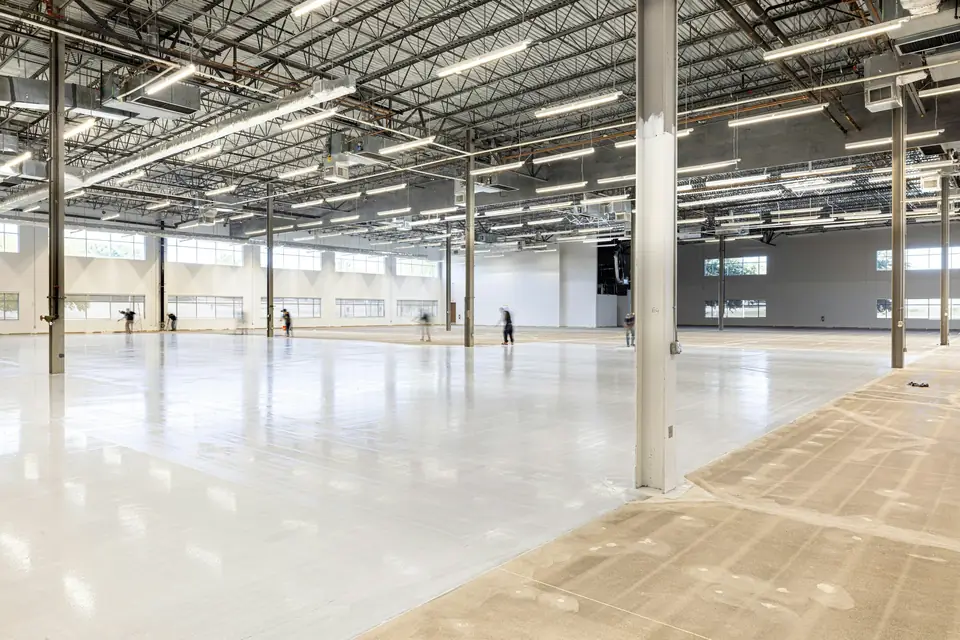
Typical residential garage with a stained, worn bare concrete floor before any coating (stock photo)

Garage Floor Epoxy and Coatings for Woodbury, MN Homes

Ground, patched and moisture-checked concrete first, then a coating system put down in the months a Minnesota garage can actually take it.

Ask about your garage floor

Stock photo of a bare garage slab, not one of our projects.

What you are buying

A garage with an epoxy floor is not wearing one product. It is three layers bonded to ground concrete: a base coat that soaks into the opened surface and grips it, an optional broadcast of decorative flake or quartz into that base while it is still wet, and a topcoat that takes the tires, salt and dropped tools.

Change the base pigment, the broadcast and the topcoat chemistry, and you get the three looks most garages end up with: one solid color, a speckled flake floor, or a clear coat over the concrete itself. An epoxy resin garage floor is two-part: resin and hardener react and harden, rather than drying the way one-part garage paint does, which is why the film stays thick enough to take a car.

The other half of the decision is where you start. New garage floor epoxy goes over a slab that has never been coated, and in Woodbury that is often a young one: about 4,744 of the city’s housing units date from 2020 or later. Those slabs need at least 28 days, a moisture test, and often a builder’s sealer ground off, and we will tell you to wait even when it pushes the job out a season. Coating over a floor that already has something on it starts with finding out whether the old layer is still bonded. For basements, shops and other floors, see our overview of epoxy floor coating in Woodbury.

Install season

Garage Floor Coating Near Me: Which Months a Woodbury Garage Can Be Coated

Search for garage floor coating near me in October and every company wants to book you before the snow. That isn’t only sales pressure. Resin chemistry has a temperature floor, and the Twin Cities (MSP) normal high sits below 42°F from November through March, so an unheated garage is out of the running for about five months a year.

That means we turn down January work in unheated garages, and it costs us jobs; a floor that peels in May costs you more. A heated garage changes the picture, but only if the concrete itself is warm, not just the air. The calendar below is built from monthly normals. What decides the actual day is two readings taken on site before anything is mixed: slab temperature and dew point.

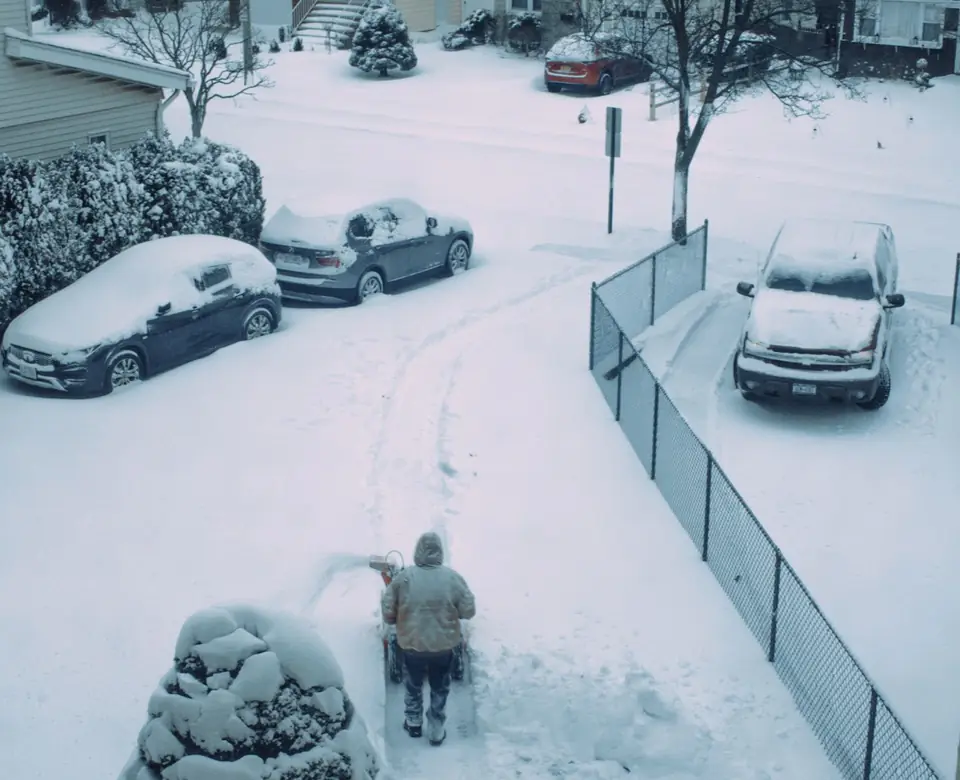
Two-story house and evergreens under fresh snow, the season when garage floors can't be coated (stock photo)
Stock photo, not one of our projects.

Minnesota install-window calendar

Pick a month for its notes. Switch between an unheated and a heated garage to change the labels.

  1. January MSP normal 23.6°F / 8.8°F · snow 11.0 in.

    The coldest month in the normals. The data sheets we cite set their minimum application temperature between 40°F and 50°F, for the slab as well as the air.

    Unheated garage: We don’t coat an unheated garage in January. We would rather lose the job than put down a floor that can’t cure the way its sheet describes.

    Heated garage: Only when the garage has been held warm long enough that the concrete itself reads above the product minimum, and the cars can stay out (with their meltwater) for the full cure.

  2. February MSP normal 28.5°F / 12.7°F · snow 9.5 in.

    Salt slush dripping off the cars is at its worst. A slab has to be dry and clean for grinding and coating, which is hard to hold for several days this time of year.

    Unheated garage: Too cold for any product we cite. Use the month to get estimates and a spot on the spring list.

    Heated garage: Workable in a well-heated garage, with a surface thermometer and dew point reading before every mix.

  3. March MSP normal 41.7°F / 24.9°F · snow 8.2 in.

    Normal highs just pass 40°F, but nights stay well below freezing, and a slab that froze all winter stays cold long after the air warms up.

    Unheated garage: Still no. A mild afternoon doesn’t mean a warm slab.

    Heated garage: Possible, and spring scheduling starts filling now.

  4. April MSP normal 56.6°F / 37.5°F · snow 3.5 in.

    In half of years the last spring 32°F night at MSP comes by April 23. One epoxy data sheet (Sikafloor-264) warns: “Do not apply while ambient and substrate temperatures are rising, as pinholes may occur.” A cold slab warming through a spring day is exactly that case, so the mix often waits for the afternoon to level off.

    Unheated garage: Late April at the earliest, and only once overnight lows stop dragging the slab down.

    Heated garage: A good month if the heat stays on through the cure.

  5. May MSP normal 69.2°F / 49.9°F · snow 0.0 in.

    The normal low finally reaches about 50°F, so both the air and the slab sit inside every product range we cite for most of the day.

    Unheated garage: The spring window opens. Dates go fast, so book in winter if you want May.

    Heated garage: Same as unheated; the heat can go off.

  6. June MSP normal 79.0°F / 60.4°F · snow 0.0 in.

    Warm slabs shorten working time. The same epoxy sheet lists a pot life of about 25 minutes at 68°F and about 15 minutes at 86°F, so crews mix smaller batches on hot days.

    Unheated garage: A good month. Early starts beat the afternoon sun on the door apron.

    Heated garage: Same as unheated.

  7. July MSP normal 83.4°F / 65.3°F · snow 0.0 in.

    The Twin Cities’ record dew point is 82°F (July 19, 2011), and most summers peak between 75°F and 78°F. A garage slab cooler than that muggy air can sweat. Every sheet we cite wants the surface at least 5°F above the dew point, and caps humidity somewhere between 80% and 95%.

    Unheated garage: Possible on most days, but some days get called off on the morning reading.

    Heated garage: Heat doesn’t help with humidity; the same morning reading decides.

  8. August MSP normal 80.7°F / 62.8°F · snow 0.0 in.

    Muggy spells still happen, so the dew point check stays. Heat matters too: one polyaspartic sheet says “Work life is considerably shortened over 90°F,” and MSP averages 12.5 days a year at or above 90°F.

    Unheated garage: A good month, with the same morning check.

    Heated garage: Same as unheated.

  9. September MSP normal 72.9°F / 54.2°F · snow 0.0 in.

    The last month whose normal low stays above 50°F. At 68°F, one epoxy sheet lists foot traffic after about 12 hours, light traffic after about 2 days and full cure after about 7.

    Unheated garage: The best stretch of the fall window. If you want the floor done before snow, this is the month to aim for.

    Heated garage: Same as unheated.

  10. October MSP normal 58.1°F / 40.9°F · snow 0.8 in.

    The median first fall 32°F night at MSP is October 18, and 28°F follows by October 29. Cure slows as slabs cool: at 50°F the same epoxy sheet stretches light traffic to about 3 days and full cure to about 10.

    Unheated garage: Early October is usually fine; later in the month it depends on the forecast for the whole cure, not just install day.

    Heated garage: Good, as long as the garage stays warm through the cure.

  11. November MSP normal 41.9°F / 27.7°F · snow 6.8 in.

    The normal high falls to 41.9°F, the bottom edge of the 40-50°F minimums, and the first salt of the season comes in on the tires.

    Unheated garage: No. Anything not done by the end of October waits for spring.

    Heated garage: Possible in a heated space, before the salt season really starts.

  12. December MSP normal 28.8°F / 15.2°F · snow 11.4 in.

    December carries the most snow in the MSP monthly normals (11.4 in. of an annual 51.2 in.), and every inch of it rides into the garage on the cars.

    Unheated garage: No.

    Heated garage: Possible, with the same slab-temperature rules as January.

Monthly normals for Minneapolis-St. Paul airport (MSP), about 10 to 12 miles west of Woodbury, not daily forecasts and not Woodbury measurements. Data-sheet figures are published examples from other manufacturers’ sheets. This calendar is guidance, not a quote or a booking.

Diamond-ground concrete with visible grinder swirl marks next to a freshly applied glossy epoxy coat (stock photo)
Stock photo: diamond-ground concrete beside a fresh coat. Not one of our projects.
Before the first coat

How Garage Floor Epoxy Contractors Grind, Patch and Test a Slab

Ask three garage floor epoxy contractors what they will do to your slab, and the good answers should sound alike, because the data sheets they work from ask for the same things: an open, clean surface with a measured profile, sound concrete, and moisture under the product’s limit. Where bids differ is how much of that they actually do, and whether it is written down.

Plenty of people search for sanding a garage floor. On bare concrete the tool is a diamond grinder, not a sander. Sanding does have a job on a recoat: a sound old coating gets abraded so the new one has something to hold, because data sheets give a recoat window (one epoxy sheet lists 8 to 24 hours at 68°F), and once a coat is well past it, the usual practice is to abrade it before anything goes on top.

Prep, step by step

Use Next and Back, or pick a step, to walk the slab from bare concrete to ready for the base coat.

  1. Diamond-grind the slab to a profile

    What gets done
    A walk-behind diamond grinder hooked to a dust extractor takes off the weak top skin of the concrete, along with any builder’s cure-and-seal, old paint or loose coating, and leaves an open, sandpaper-like texture.
    Why it matters
    Coatings hold on mechanically. The ICRI concrete surface profile scale runs from CSP 1 (nearly flat) to CSP 10 (very rough). One epoxy data sheet asks for CSP 3 to 4; an acid etch only gets you to CSP 1.
    What to ask the crew
    Which CSP does the product’s sheet call for, and which machine gets you there on my slab?
  2. Vacuum every bit of grinding dust

    What gets done
    The whole floor, the edges along the stem walls and every joint get a pass with an industrial vacuum. Corners the big grinder can’t reach get a hand grinder first.
    Why it matters
    Dust left on the surface becomes the layer the base coat bonds to, and that layer lets go first, usually under tires.
    What to ask the crew
    Do you grind with dust extraction, and how do you keep dust out of the house and the car?
  3. Fill cracks and treat control joints

    What gets done
    Cracks are opened with a crack-chasing blade, cleaned out, filled with a rigid repair material and ground flush. Saw-cut control joints are either filled or kept open, depending on the plan agreed up front.
    Why it matters
    Concrete keeps moving a little. One coatings manufacturer notes that on young concrete “some random shrinkage cracks could occur that transfer up through the coating,” so nobody honest promises a crack will never show again.
    What to ask the crew
    Which cracks get filled, which joints stay open, and is that written down?
  4. Patch the pitted door apron

    What gets done
    The first few feet inside the overhead door, where salty water drips off the cars and freezes, get the closest look. Scaled, pitted or spalled concrete is chipped back to sound material, patched and ground level with the rest.
    Why it matters
    Deicers “tend to amplify freeze-thaw deterioration,” per a concrete industry sheet, and the Twin Cities (MSP) normals put roughly 75 days a year across the freezing mark. On a 1990s or 2000s Woodbury slab, that strip has had twenty-plus winters of it.
    What to ask the crew
    How much apron patching is included, and how is extra handled if grinding opens up more?
  5. Test the slab for moisture

    What gets done
    New slabs and any slab with doubts get tested: either a calcium chloride dome under ASTM F1869, which reports the moisture vapor emission rate in pounds over 1,000 square feet in 24 hours, or relative humidity probes set into the slab under ASTM F2170.
    Why it matters
    The pass mark comes from the product, not from ASTM: one epoxy sheet allows up to 85% RH by F2170. Since the standard’s 2018 revision, an F2170 reading can be documented after 24 hours instead of 72. An F1869 dome only describes the slab on the day it ran. White powder along cracks or the stem wall (efflorescence) is salt left by water moving through the slab, and it earns a test even on an older floor.
    What to ask the crew
    Which test, where on the floor, and what is the plan if the slab misses the product’s limit?
  6. Check the profile against the reference chips

    What gets done
    The ground surface is compared with CSP reference samples, and slick or soft spots get another pass before anyone opens a can.
    Why it matters
    Profile should match thickness. A distributor’s summary of the older ICRI guideline puts 4 to 5 mil coatings at CSP 3 and 15 to 50 mil systems at CSP 4 or 5.
    What to ask the crew
    How thick is the finished system, and does the profile you ground match it?
  7. Ready for the base coat

    What gets done
    Last vacuum, walls masked, and slab temperature, air temperature and dew point read and written down.
    Why it matters
    The sheets set the limits, not the calendar: a surface 5°F or more over the dew point, and a minimum of 40°F to 50°F depending on the product.
    What to ask the crew
    Will you log the readings on install day, and can I have a copy with the invoice?

A general prep sequence, not a quote or a scope for your floor. The order and the time each step takes change with the slab.

The build

What a Garage Epoxy System Is Made Of: Solid Color, Flake or Clear

Every durable garage floor coating we would put down has the same bones, a base bonded to ground concrete and a topcoat over it. What changes is the middle and the finish. Here is how the three common builds compare on the things people actually notice a year later.

Solid color, flake broadcast and clear garage coating builds compared
 Solid colorFlake broadcastClear over concrete
What goes downPigmented epoxy base, then a second pigmented coat or a clear topcoatBase coat, decorative flakes thrown into it wet, excess scraped off, clear topcoatClear epoxy or a clear topcoat straight onto ground (sometimes stained) concrete
How it looksOne even color; reads like a showroomSpeckled, from subtle to busy, depending on the blendThe concrete itself, darker and glossier
What it hidesLittle: dust, tire marks and patch lines showThe most: sand, salt film, patched cracksNothing. It magnifies every stain and patch
Wet gripSlick unless aggregate is addedSome texture from the chips; more can be addedSlick unless aggregate is added
Sun at the doorPlain epoxy as the last coat can amber where sunlight reaches it; one epoxy maker’s sheet recommends a topcoat “for added UV stability.” Most garage builds finish with a polyaspartic or urethane topcoat for that reason.

Color, flake or clear in practice

A colored epoxy garage floor in one solid gray suits a tidy shop or a car you show off, and it shows dirt like a showroom floor does. Most family garages in salt country end up with flake, which is why it has its own page on full and partial flake broadcasts. For a fast return to parking, the topcoat chemistry matters more than the look; see polyaspartic topcoats and one-day systems. Marbled metallic pours are possible in a garage but are usually a basement or showroom choice.

Clear garage floor epoxy over bare concrete is the build we talk people out of most often. It shows every oil stain and patch under a gloss. If what you like is the concrete itself, a clear sealer or polished concrete often gets you there for less.

Grip on a non slip garage floor coating

Texture is added in the last coats: an aluminum oxide anti-slip additive broadcast into or mixed with the topcoat, with or without flakes. More grit grips better on snowmelt and mops worse, so the amount is a choice, not a default.

Terrazzo looks on a garage floor

People ask for a terrazzo garage floor, and true terrazzo is a different product: stone or glass chips set in a cement or resin matrix, then ground and polished flat after it cures. It is a commercial lobby floor, not a garage coating. A dense quartz or fine flake broadcast under a clear topcoat is the garage-friendly cousin of that look.

Under the label: 100% solids epoxy, water-based epoxy or polyurea

Two bids can both say “epoxy” and mean very different films. The question that separates them is how much of what goes on the floor stays there, and each chemistry has its own way of failing in a Minnesota garage.

100% solids epoxy

No water or solvent to evaporate, so nearly everything rolled out cures into film. Thick, hard and slow: one published 100% solids epoxy lists a 10 to 40 minute pot life and 5 days to full cure at 75°F, and its maker recommends a topcoat “for added UV stability.” The usual base coat under flake.

Fails by ambering where sun reaches it if left as the last coat, and by mixing too much for the crew to spread in a hot garage.

Water-based epoxy

Part of what goes down is water, which leaves as the film cures, so each coat ends up thinner than it went on. Forgiving to roll and low in odor, which is why it is the chemistry in many store kits and some primers.

Fails by hot-tire pickup: tires come in warm, soften a thin film, and lift it in tire-shaped patches, worst over an acid-washed slab.

Polyurea and polyaspartic

Polyaspartic is an aliphatic member of the polyurea family, which is why it holds color in sun. Fast: one sheet lists vehicle traffic in about 24 hours at 77°F, and says to use it “only on primed substrates.” When a bid says polyurea, ask which coat it means.

Fails by going down on a slab that is still giving off moisture; one sheet warns against “a porous or damp surface where moisture vapor transmission will occur.”

Living with it

Epoxy Garage Floor Near Me: The First Winters on a Coated Floor

A coated floor is easier to keep than bare concrete, not maintenance-free. In a Woodbury garage the job is mostly salt: the slush that rides in from roads from November to March, and where it goes when it leaves your floor.

That last part is local. The Minnesota Pollution Control Agency says a single teaspoon of deicing salt permanently pollutes five gallons of water, and two Woodbury lakes, Battle Creek and Carver, are on the chloride-impaired list. A sealed floor lets you squeegee brine out and sweep up the dried salt instead of washing it into the street. The planner below is the routine we would follow on our own garage.

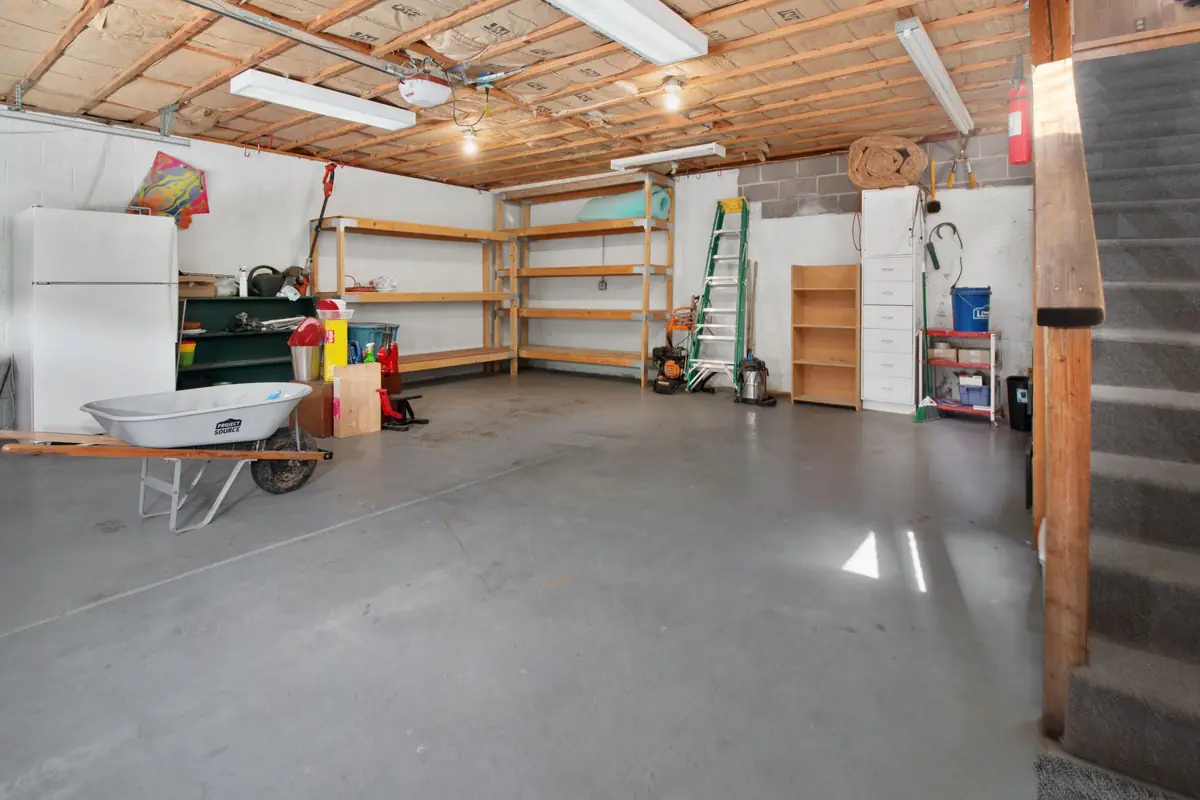
Homeowner clearing a suburban driveway with a snowblower in front of the garage (stock photo)
Stock photo, not one of our projects.

Coated-floor maintenance planner

Tick items as you do them. Your ticks stay in this browser only; nothing is sent anywhere.

0 of 15 done

November First snow
December to February Mid-winter salt slush
March to April Spring wash-out
June to August Hot tires and sun at the door
Early October Fall check before the first freeze

General care for a coated garage floor. Your coating’s own care sheet comes first where it says something different.

Comparing bids

Reading Garage Floor Coating Companies’ Written Scopes Side by Side

Garage floor coating companies quote in different shapes: one sends a price per square foot, another a package name, a third a page of chemistry. To compare them, line each one up against the same list. Anything missing is a question, not a red flag by itself.

Watch the words, too. Garage floor resurfacing contractors often mean a cement overlay; garage floor refinishing companies may mean anything from a sealer to a full coating. Ask which one you are being quoted.

System
The chemistry of each layer (for example, epoxy base, polyaspartic topcoat), not only a package name.
Prep
Grinding or blasting, and the target CSP.
Moisture
Which test, how many spots, the product limit, and the fallback if the slab misses it.
Cracks, joints, apron
What is included, and how extra repair found after grinding is handled and approved.
Build
Number of coats or finished thickness in mils; full or partial flake coverage.
Edges
Stem walls, the step to the house and any cove: included or excluded.
Weather
What temperature or dew point reading stops the job, and who reschedules.
Cure
Walk-on and park-on times for the temperature expected that week.
Warranty
If one is offered: what it covers (peeling, wear, staining), what voids it, and who honors it if the company closes.
Next step

Have Someone Look at Your Concrete Garage Floor

Tell us the size of the garage, roughly how old the slab is, and whether anything is on it now. We will set a time to look at the concrete, check the apron and cracks, and decide whether a moisture test is needed before talking about a system.

Photos help but aren’t required. If the best answer for your floor is a sealer, a repair or waiting until spring, that is what we will tell you.

Ask for a garage floor estimate

Prefer to talk? Call (651) 661-4781. We use your details only to reply about this floor.

Garage Epoxy Answers: New Slabs, Re-Coats, Kits and Grip

We just moved into a new build. When can the garage floor be coated?

Not before the concrete is at least 28 days old, which is the usual wait for a slab to reach full strength and give up its extra water, and often later. After that, a moisture test against the product’s own limit decides. Many new Woodbury garages also carry a builder’s cure-and-seal that has to be ground off completely. One more reason not to rush: a concrete industry sheet generally recommends no deicers in a slab’s first year, and the cars will drip brine on it all the same, so plan on squeegeeing that first winter.

Can you re-epoxy a garage floor that already has a coating on it?

Sometimes. If the old coating is still tightly bonded everywhere, it gets abraded (sanded or lightly ground) so the new coat has something to grip. Data sheets only promise coat-to-coat bonding inside a recoat window, and a floor that has been parked on for years is long past it. If it peels, flakes or lifts under tires anywhere, it comes off first. See repair, recoat and removal of failing coatings.

Is a store-bought kit ever good enough?

Yes, on the right floor. A dry, never-sealed slab in a garage that sees light use, prepped with a rented grinder rather than an acid wash, can do fine with a kit, and it costs far less than hiring anyone. Kits struggle on slabs with a builder’s sealer, salt-pitted aprons, moisture, or daily parking with winter tires. If that describes your garage, the prep is the part worth paying for.

How do you make a coated garage floor less slippery when it’s wet?

With texture in the last coats. Flake broadcasts add some on their own; for more, an aluminum oxide anti-slip additive is broadcast into or mixed with the topcoat. For a benchmark, the tile industry treats a wet dynamic coefficient of friction of 0.42 or higher as suitable for level interior floors walked on wet, and one epoxy sheet reports 0.6 for its coating. More grit means harder mopping, so it’s a trade-off you set with the installer.

What is the difference between garage floor resurfacing and a coating?

Resurfacing usually means a thin cement-based overlay that gives worn concrete a new concrete surface. A coating is a resin film bonded to the concrete you have. Resurfacing can make sense when a slab is badly scaled across the whole floor; most Woodbury garages only need the apron and cracks patched before coating. Ask any bidder which one they are actually quoting.

Can the step into the house and the stem walls be coated too?

Usually, yes. The concrete step and the low stem walls along the sides can be ground and coated in the same system, which gives a cleaner edge where salt water tends to collect. It is slow hand work with small tools, so it should be listed on the estimate as included or excluded, not assumed either way.

Sources and data sheets cited on this page
  1. NOAA 1991-2020 monthly normals, MSP (USW00014922): www.ncei.noaa.gov/data/normals-monthly/1991-2020/access/USW00014922.csv
  2. NOAA 1991-2020 annual normals, MSP: freeze dates, snowfall, days at or below 32°F: www.ncei.noaa.gov/data/normals-annualseasonal/1991-2020/access/USW00014922.csv
  3. Twin Cities dew point records (MN DNR State Climatology Office): www.dnr.state.mn.us/climate/twin_cities/mspdewpoint.html
  4. Sikafloor-264 product data sheet (epoxy example): industry.sika.com/content/dam/dms/us01/g/sikafloor_-264.pdf
  5. Ghostshield Epoxy Max 100 TDS (epoxy example): cdn.shopify.com/s/files/1/2077/9359/files/100_TDS_v.1.pdf
  6. APF Polyaspartic 7500 Low Odor PDS (polyaspartic example): apfepoxy.com/cdn/shop/files/APF_Polyaspartic_7500_LowOdorMC_PDS__07.18.25.pdf
  7. Sikalastic-748 PA product data sheet (polyaspartic example): usa.sika.com/content/dam/dms/us01/r/sikalastic_-748_pa.pdf
  8. Concrete surface profile scale (DeFelsko, after ICRI 310.2R): www.defelsko.com/csp
  9. Concrete surface profile visual scale (Clemtex): archive.clemtex.com/literature/files/concrete-surface-profile-visual-scale.pdf
  10. ASTM F1869 (moisture vapor emission rate): store.astm.org/f1869-23.html
  11. ASTM F2170 (in-slab relative humidity): store.astm.org/f2170-19a.html
  12. F2170 2018 revision, 24-hour readings (Wagner Meters): wagnermeters.com/newsroom/24hr-astm-f2170-test-results
  13. 28-day cure before coatings (Tnemec): tnemec.com/remedy-index-page/28-day-cure-for-concrete/
  14. Deicer scaling and ammonium deicers (Pennsylvania Aggregates and Concrete Association): www.pacaweb.org/uploads/documents/PIS_Scaling.pdf
  15. Smart Salting flyer (MPCA): www.pca.state.mn.us/sites/default/files/p-tr1-45.pdf
  16. Chloride-impaired waters in Washington County (East Metro Water): eastmetrowater.org/2023/06/18/state-of-the-lakes-in-washington-county/
  17. Stormwater is not treated (City of North Branch, MN): www.northbranchmn.gov/497/Illicit-Discharges
  18. Anti-slip additive TDS (aluminum oxide, Rust-Oleum): images.homedepot-static.com/catalog/pdfImages/d9/d9d61082-cb14-498f-9542-39453bba47ab.pdf
  19. DCOF 0.42 under ANSI A326.3 (Crossville): www.crossville.com/learn/porcelain-tile-dcof-ratings-and-applications/
  20. Terrazzo, definition (Wikipedia): en.wikipedia.org/wiki/Terrazzo
  21. Year structure built, Woodbury (ACS 2024 1-year, B25034): api.censusreporter.org/1.0/data/show/latest?table_ids=B25034&geo_ids=16000US2771428
Estimate Call